

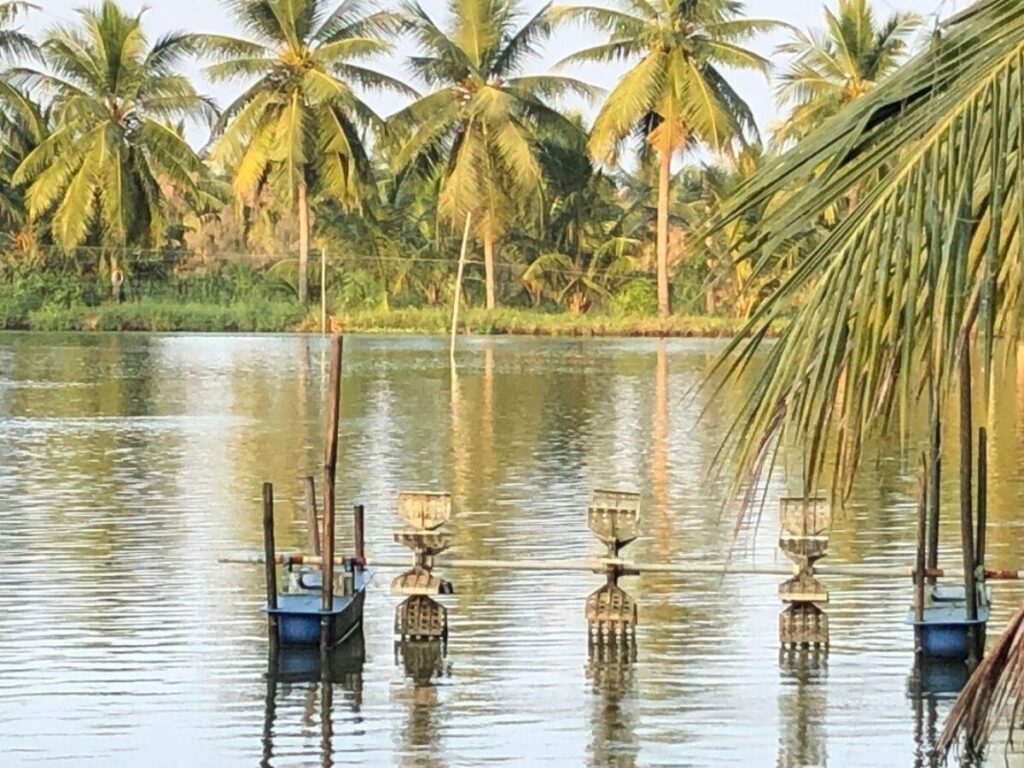
The coastal belt of the Godavari region, especially areas in East Godavari such as Kakinada rural, Uppada, Amalapuram, and nearby Konaseema mandals, is currently experiencing growing pressure in its aquaculture sector, primarily driven by rising operational costs and market uncertainties. Aquaculture, particularly shrimp farming (Vannamei variety), remains one of the most profitable rural livelihoods in the region, but recent trends have created financial stress for farmers.
One of the biggest concerns is the continuous increase in fish and shrimp feed prices, which account for the largest share of production costs. Feed ingredients such as soybean meal, fishmeal, and oil-based supplements have become more expensive due to global supply fluctuations and import dependency. As a result, farmers are forced to invest significantly more in daily pond maintenance, directly impacting profit margins.
In addition to feed costs, farmers are also struggling with rising electricity and diesel expenses used for operating aerators, water pumps, and oxygen supply systems in shrimp ponds. These systems are essential for maintaining water quality and ensuring healthy shrimp growth, but they heavily increase production costs, especially for small and medium-scale farmers.
Another challenge is the unstable export market pricing, which directly affects income from harvested shrimp. Since a large portion of Godavari aquaculture production is export-oriented, even small changes in international demand or currency fluctuations can impact local farm-gate prices. This creates uncertainty for farmers planning their crop cycles and investments.
Disease management is also a persistent issue in aquaculture ponds. Sudden outbreaks caused by bacterial or viral infections can lead to significant losses if not controlled quickly. Farmers are increasingly relying on improved biosecurity measures, but the risk remains a constant concern in intensive farming systems.
Despite these challenges, the aquaculture sector continues to be a backbone of the coastal economy in East Godavari. Thousands of families depend on shrimp farming, hatcheries, feed supply chains, transport services, and processing units for their livelihood. The industry also contributes significantly to foreign exchange earnings through seafood exports.