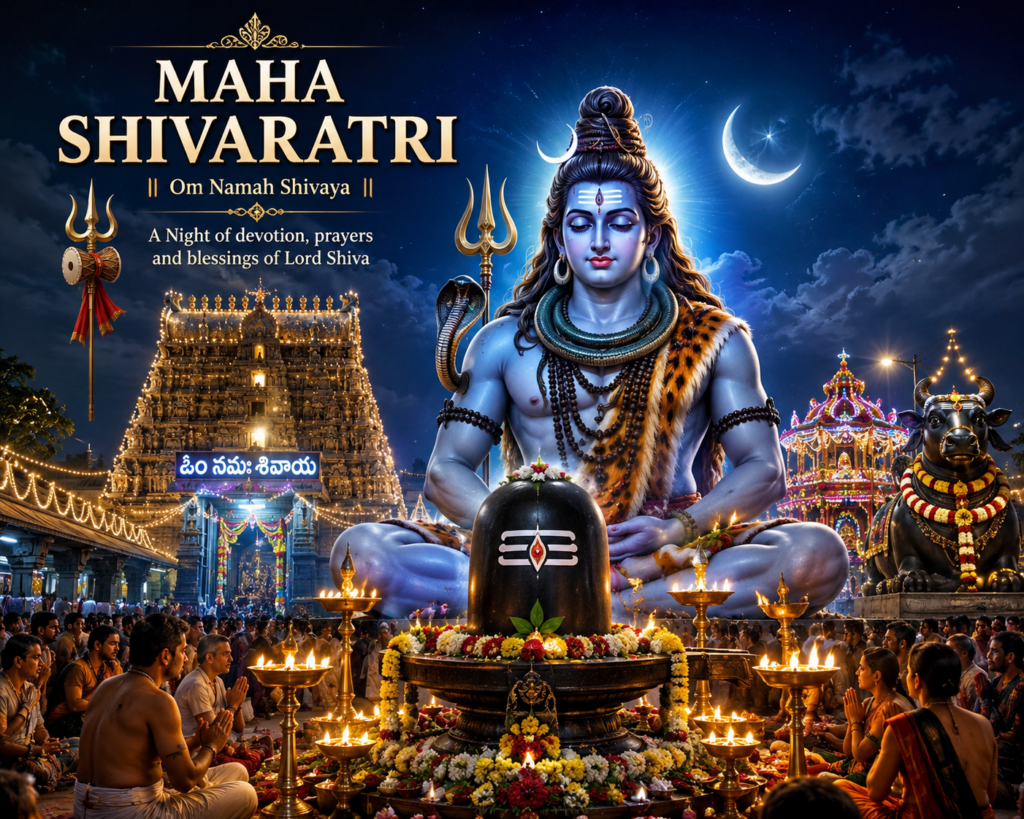
Maha Shivaratri—translating literally to “The Great Night of Shiva”—is one of the most significant, deeply spiritual, and widely celebrated festivals in Hinduism. Falling on the 13th night or 14th day of the dark fortnight in the Hindu lunar month of Phalguna or Maagha (typically overlapping February or March), it marks a night of profound spiritual awakening, intense devotion, and joyous celebration across India and the global Hindu diaspora.
Unlike many Hindu festivals that are characterized by daytime feasting and social revelry, Maha Shivaratri is inherently introspective. It is defined by all-night vigils (Jagaran), strict fasting, meditation, and the chanting of sacred hymns.
🔱 The Cosmic Legends Behind the Sacred Night
Several profound mythological occurrences from the Puranas are anchored to this specific night, each highlighting a different facet of Lord Shiva’s divine nature:
- The Celestial Wedding: The most widely celebrated belief is that Maha Shivaratri commemorates the day Lord Shiva married Goddess Parvati. It represents the ultimate union of Purusha (pure consciousness/Shiva) and Prakriti (creative energy/Parvati), symbolizing cosmic balance and the sanctification of marital bonds.
- The Cosmic Dance (Tandava): It is believed that on this night, Shiva performed the Ananda Tandava—the primordial dance of creation, preservation, and destruction. This dance regulates the rhythm of the universe and signifies the eternal cycle of life.
- The Legend of Neelakantha (The Blue-Throated One): During the Samudra Manthan (the churning of the cosmic ocean), a deadly poison called Halahala emerged, threatening to obliterate all existence. Shiva drank the poison to protect the universe, trapping it in his throat with the help of Parvati. His throat turned blue, earning him the name Neelakantha. Devotees keep a vigil to stay awake alongside the gods to honor and comfort him after consuming the venom.