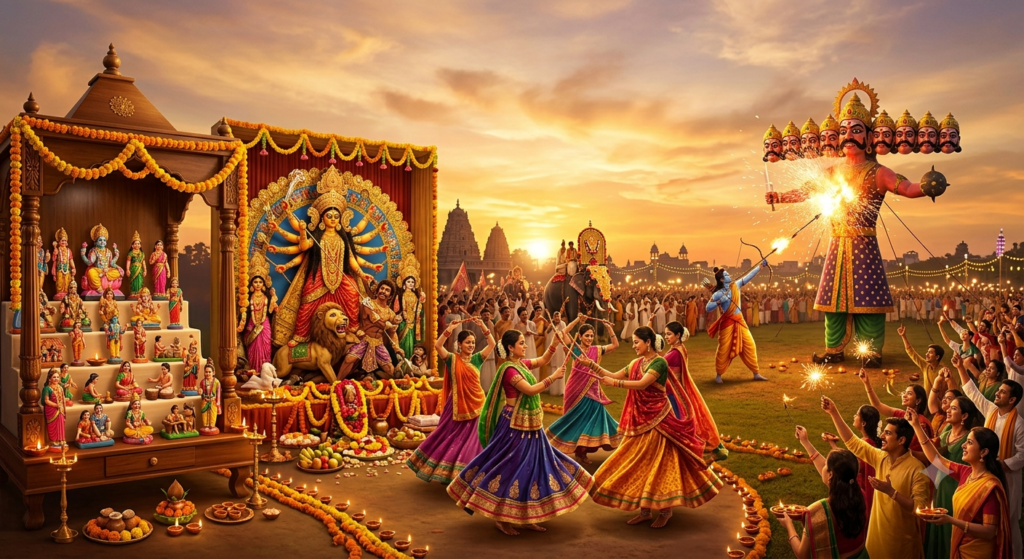
Dasara, also known as Navaratri, is one of the most vibrant and spiritually significant festivals celebrated across India, and it holds a special cultural importance in regions like East Godavari, Andhra Pradesh. The festival symbolizes the victory of good over evil, marking the triumph of Goddess Durga over the demon Mahishasura, as well as Lord Rama’s victory over Ravana.
Navaratri literally means “nine nights”, during which the divine feminine energy is worshipped in the forms of Goddess Durga, Lakshmi, and Saraswati. Each set of three days is dedicated to one aspect of the goddess: power (Shakti), wealth (Lakshmi), and knowledge (Saraswati).
🌸 Religious Significance
During Navaratri, devotees observe fasting, perform daily pujas, and recite sacred texts like the Durga Saptashati. Temples across East Godavari become highly active, especially famous shrines like:
- Talupulamma Lova Temple
- Maridamma Ammavaru Temple
Special alankaras (decorations) of the goddess are performed each day, and thousands of devotees gather to witness divine rituals and seek blessings.
🎉 Cultural Celebrations
Navaratri is not only a religious event but also a cultural celebration:
- Traditional Dandiya and folk dances are performed in many areas
- Temple streets are decorated with lights, flowers, and rangoli
- Cultural programs, devotional songs, and Harikathas are organized
- Women wear traditional sarees and participate in community prayers
In rural East Godavari, villages come alive with festive energy, and every household prepares special food offerings.