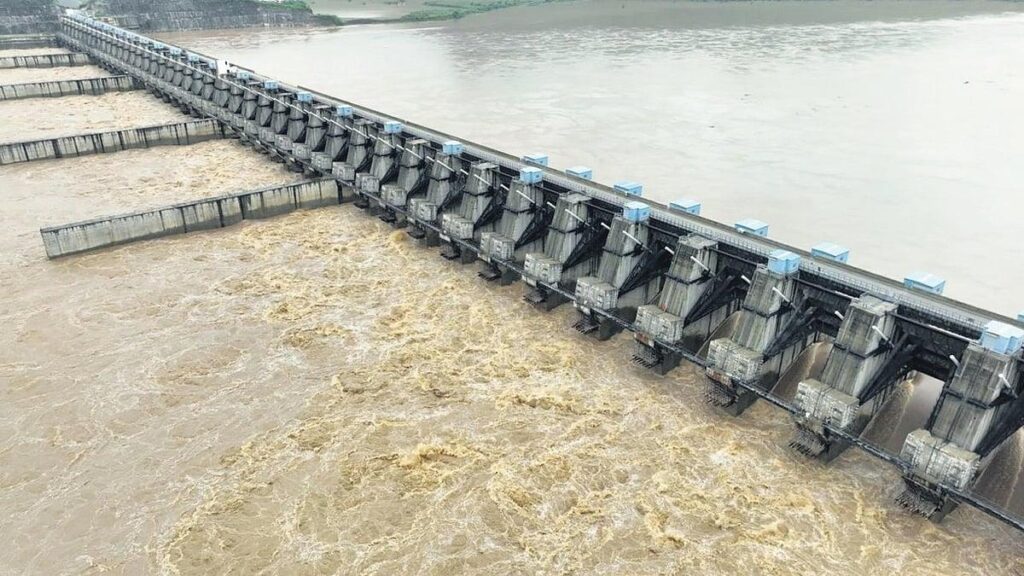
The release of water from the Godavari irrigation system, especially through the Sir Arthur Cotton Barrage at Dowleswaram, has brought a significant wave of relief and optimism to farmers across the East Godavari delta region. This timely water release marks the beginning of a crucial phase for the Kharif agricultural season, which is highly dependent on canal irrigation for paddy cultivation.
The Godavari delta, often referred to as one of the most fertile agricultural belts in South India, depends heavily on a well-coordinated irrigation network consisting of major canals, distributaries, and lift systems. With the controlled release of water, canals in regions such as Rajahmundry rural, Kadiyam, Amalapuram, Kakinada rural, and Konaseema belt have begun receiving steady inflows, enabling farmers to restart agricultural operations that were previously delayed due to uncertainty in water availability.
This water release plays a vital role in supporting the transplantation of paddy seedlings, nursery preparation, and land preparation activities. Farmers are actively engaging in fieldwork, preparing bunds, leveling land, and ensuring that seedbeds are ready for transplantation. In many villages, agricultural activity has increased noticeably, with labor demand rising for transplantation work, irrigation channel maintenance, and fertilizer application.
Officials from the irrigation department highlight that the release is carefully regulated to ensure equitable distribution across eastern, central, and tail-end delta regions, preventing water stress in downstream areas. The integration of reservoirs, barrage systems, and canal regulators ensures that water reaches even remote agricultural fields, supporting both small and marginal farmers.
Agricultural experts also emphasize that this timely water supply is crucial for achieving expected paddy yields in the delta region, as delays in irrigation can significantly impact crop cycles and productivity. Stable water availability not only supports rice cultivation but also benefits allied activities such as aquaculture feed crops, coconut plantations, and horticulture fields.